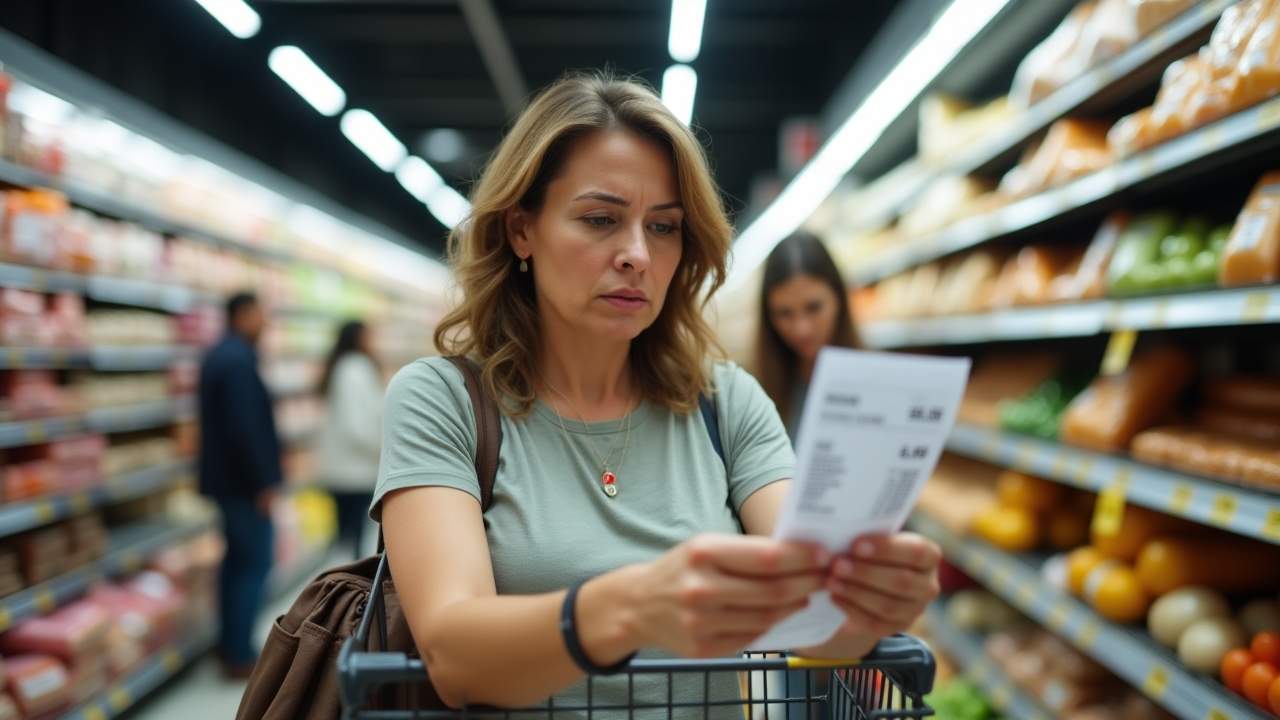
How food spending changed over the last 12 months
Food spending behavior over the past year reveals significant transformations in Argentine household consumption priorities...
Monthly evolution of food spending
During the period analyzed between January and December 2025, food spending experienced a nominal increase of 67% compared to the same period last year. However, when adjusted for accumulated food sector inflation, the real increase stands at approximately 12%, reflecting an increase in purchase volume and changes in basic basket composition.
Food budget distribution showed significant redistributions between categories. Bakery and cereal products maintained a stable 18% share, while meat and derivatives reduced their weight from 32% to 27% of the total, compensated by an increase in legumes, pasta, and products with better economic yield. Fruits and vegetables maintained constant 22% participation, though with internal substitutions toward seasonal and lower unit cost products.
Observed adaptation strategies
Households implemented various tactics to optimize the purchasing power of their food budget. 68% of participants reported increasing purchase frequency at wholesale stores and local markets, seeking better volume prices. Weekly menu planning grew by 34%, allowing more efficient purchases and food waste reduction.
Adoption of store brands or second brands increased significantly, with 52% of households indicating this change in at least five product categories. Discount programs, loyalty cards, and leveraging temporary offers consolidated as habitual practices in 71% of studied families. These adaptations allowed maintaining acceptable nutritional standards despite growing budgetary restrictions.
Projections for the next period
Predictive models suggest that pressure on food spending will continue during the first half of 2026, with expected inflation-adjusted increases of 6-8% additional. Households anticipate deepening efficiency strategies, with greater emphasis on home cooking reducing consumption of processed products and prepared meals. Strengthening collaborative consumption networks, such as group purchases and exchange fairs, emerges as a growing trend that could partially mitigate the projected economic impact.